Tonight's dinner
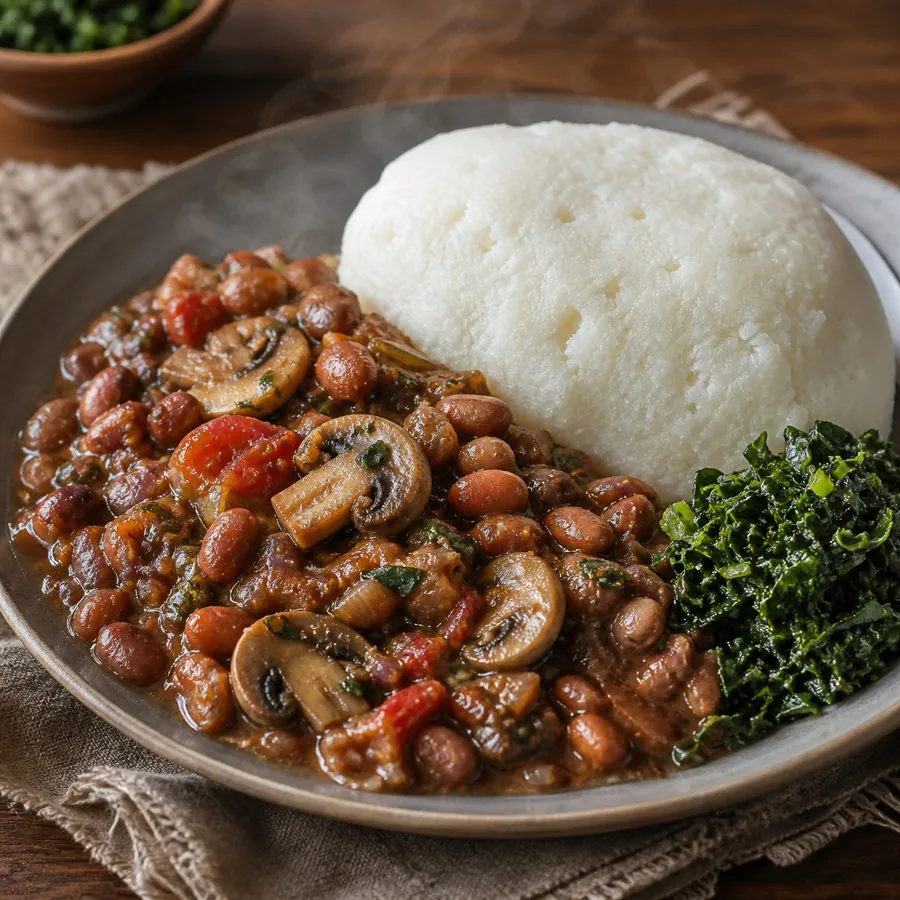
Malawian Nsima Mushroom Bean Relish
Browned mushrooms and black beans in a smoky tomato relish, served with stiff maize nsima.
- 50 min
- Serves 3
- Mushrooms
- Vegan
Ingredients
- 12 oz mushrooms, sliced
- 1 can black beans, drained
- 1 1/2 cups maize meal
- 3 tbsp neutral oil
- 1 large onion, finely diced
- 4 garlic cloves, minced
- 3 ripe tomatoes, diced
- 1 tsp smoked paprika
- 1 green chili, minced
- 1 cup vegetable stock or water
- 1 lime, cut into wedges
- 1 tsp fine salt, plus more to taste
- 2 tbsp chopped cilantro or parsley
Steps
- Start the nsima first. Bring 4 cups water and 1/2 teaspoon salt to a boil in a heavy pot.
- Whisk 1/2 cup of the maize meal into 1 cup cold water to make a smooth slurry, stir it into the boiling water, and simmer for 5 minutes.
- Add the remaining maize meal in a steady stream while beating hard with a wooden spoon, then cover and cook over the lowest heat for 25 to 30 minutes, beating and scraping the base every 5 minutes so it does not catch.
- Meanwhile heat 2 tablespoons of the oil in a wide pan over medium-high heat and add the mushrooms in a single layer. Leave them undisturbed for 3 minutes, then stir and cook for 6 minutes more, until browned and dry.
- Do not salt the mushrooms until they have browned; salt pulls out water and they will stew instead.
- Add the remaining oil and the onion and cook for 6 minutes until soft, then the garlic and chili for 30 seconds. Take the pan off the heat and stir in the paprika for 20 seconds.
- Add the tomatoes and stock and simmer for 10 to 12 minutes, until thick, then fold in the beans and cook for 5 minutes, crushing a few against the pan to thicken the relish.
- Beat the nsima hard for a final minute until stiff and smooth, then shape it into mounds and serve with the relish, the cilantro, and lime wedges.
Use the listed quantities as a guide, adjust seasoning to taste, and cook proteins to a safe internal temperature.