Tonight's dinner
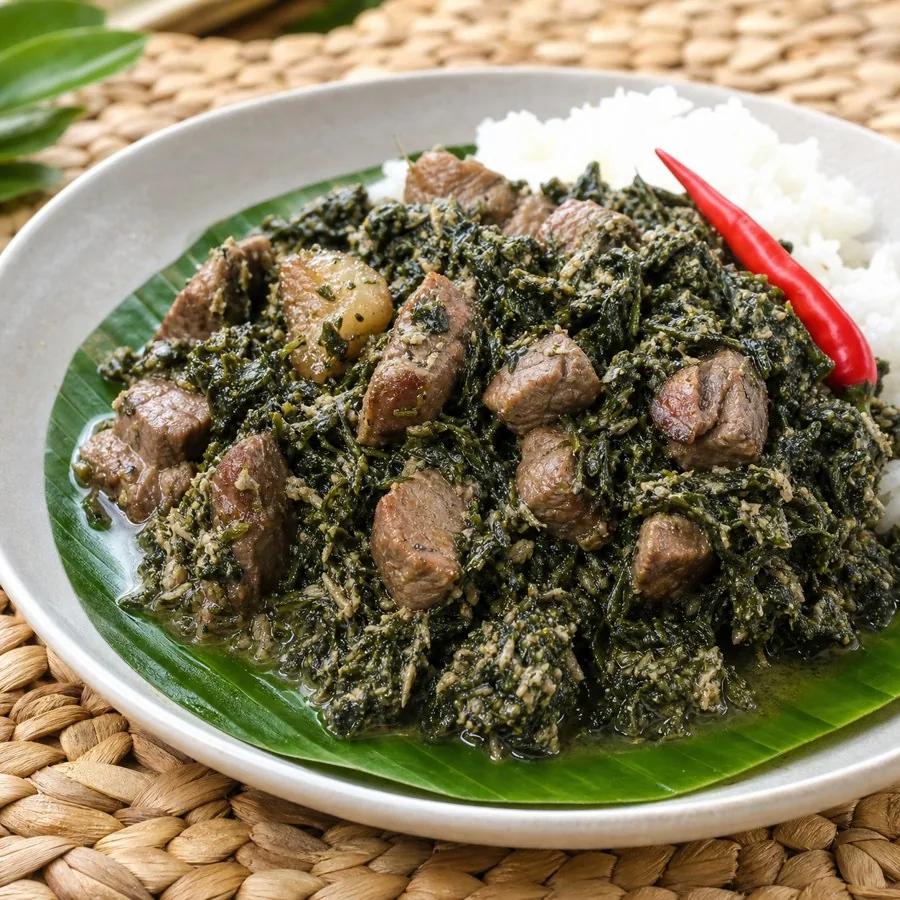
Madagascar Ravitoto Pork with Coconut
Pork slowly braised with pounded greens and coconut milk until dark, rich, and falling apart.
- 60 min
- Serves 3
- Pork
Ingredients
- 1 1/4 lb pork shoulder, cut into strips
- 10 cups chopped spinach or cassava leaves
- 1 can coconut milk
- 2 tbsp neutral oil
- 1 large onion, finely diced
- 6 garlic cloves, minced
- 1 tbsp freshly grated ginger
- 1 green chili, minced
- 2 cups stock or water
- 1 1/2 cups rice, for serving
- 1 lemon, cut into wedges
- 1 1/2 tsp fine salt, plus more to taste
- 2 tbsp chopped cilantro or parsley
Steps
- Pat the pork strips dry and season them with salt. Heat the oil in a heavy pot over medium-high heat and brown the pork in two batches for 5 to 6 minutes each, until well crusted. Crowding the pot steams the meat and costs the dish its depth.
- Return all the pork with the onion and cook for 6 minutes, scraping up the browned residue from the base.
- Add the garlic, ginger, and chili and cook for 1 minute until fragrant.
- Pour in the stock, bring to a boil, then reduce to the barest simmer, cover, and cook for 40 minutes, until the pork is tender enough to pull apart with a fork.
- Meanwhile pound or pulse the spinach in short bursts until they are broken down and dark but not liquefied. That crushing is what gives ravitoto its characteristic texture.
- Add the crushed greens to the pot and cook uncovered for 20 minutes, stirring occasionally, until they are completely soft and have darkened.
- Stir in the coconut milk and simmer very gently for 10 minutes more, keeping it below a rolling boil so it does not split, until the stew is thick and glossy.
- Rinse and cook the rice while the stew finishes, then season the ravitoto with salt and serve over the rice with the cilantro and lemon wedges.
Allergen note: Contains coconut.
Use the listed quantities as a guide, adjust seasoning to taste, and cook proteins to a safe internal temperature.