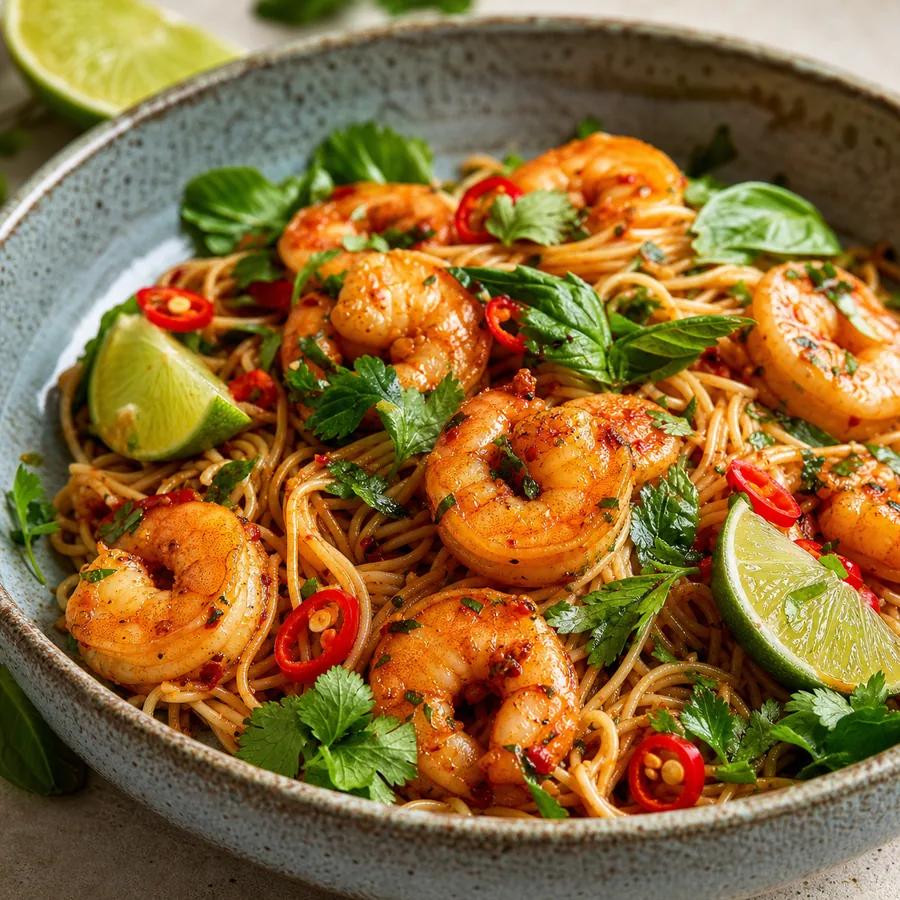
Tonight's dinner
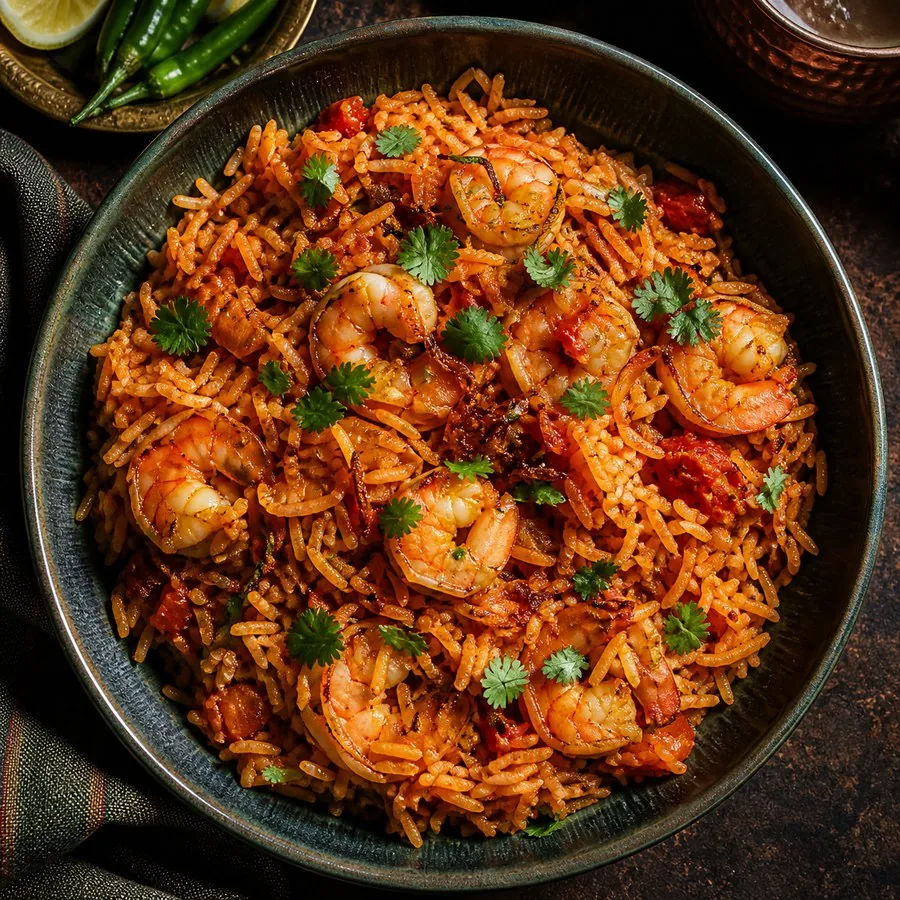
Kuwaiti Murabyan Tomato Shrimp Rice
Kuwaiti Murabyan Tomato Shrimp Rice is a practical 40-minute dinner for 2, layering 12 oz shrimp, peeled and deveined with 3/4 cup basmati rice and bright ground turmeric.
- 40 min
- Serves 2
- Shrimp
Ingredients
- 12 oz shrimp, peeled and deveined
- 3/4 cup basmati rice
- 1 cup crushed tomatoes
- 1 tbsp olive oil or unsalted butter
- 1 small onion or 2 scallions, finely chopped
- 2 garlic cloves, minced
- 1/2 tsp ground turmeric
- 1/2 lemon, cut into wedges
- 1/4 cup fresh herbs, chopped
- Kosher salt and freshly ground black pepper
Steps
- Rinse the basmati rice in several changes of cold water until it runs clear, then leave it to soak for 15 minutes and drain. Soaked rice cooks into long, separate grains rather than a sticky mass.
- Pat the shrimp dry, season them with salt, pepper, and half the turmeric, and refrigerate them while you build the base.
- Heat the oil or butter in a wide saucepan over medium heat and cook the onion with a pinch of salt for 7 to 8 minutes, until soft and deeply golden. This browning is the backbone of the dish.
- Add the garlic and remaining turmeric for 30 seconds, then the crushed tomatoes. Cook for 8 minutes, until the sauce darkens and the oil starts to separate at the edges.
- Stir in the drained rice to coat it, then add 1 1/2 cups hot water and 1/2 teaspoon salt. Bring to a boil, cover, reduce to the lowest heat, and cook for 12 minutes.
- Scatter the shrimp over the surface of the rice, replace the lid, and steam for 4 to 5 minutes only, until they turn pink and opaque and reach 145F (63C). Shrimp toughen fast, so do not stir them in early.
- Take the pan off the heat and leave it covered for 5 minutes, then fold the shrimp gently through the rice with a fork.
- Finish with the fresh herbs and serve with lemon wedges.
Allergen note: Contains dairy and shellfish.
Use the listed quantities as a guide, adjust seasoning to taste, and cook proteins to a safe internal temperature.