Tonight's dinner
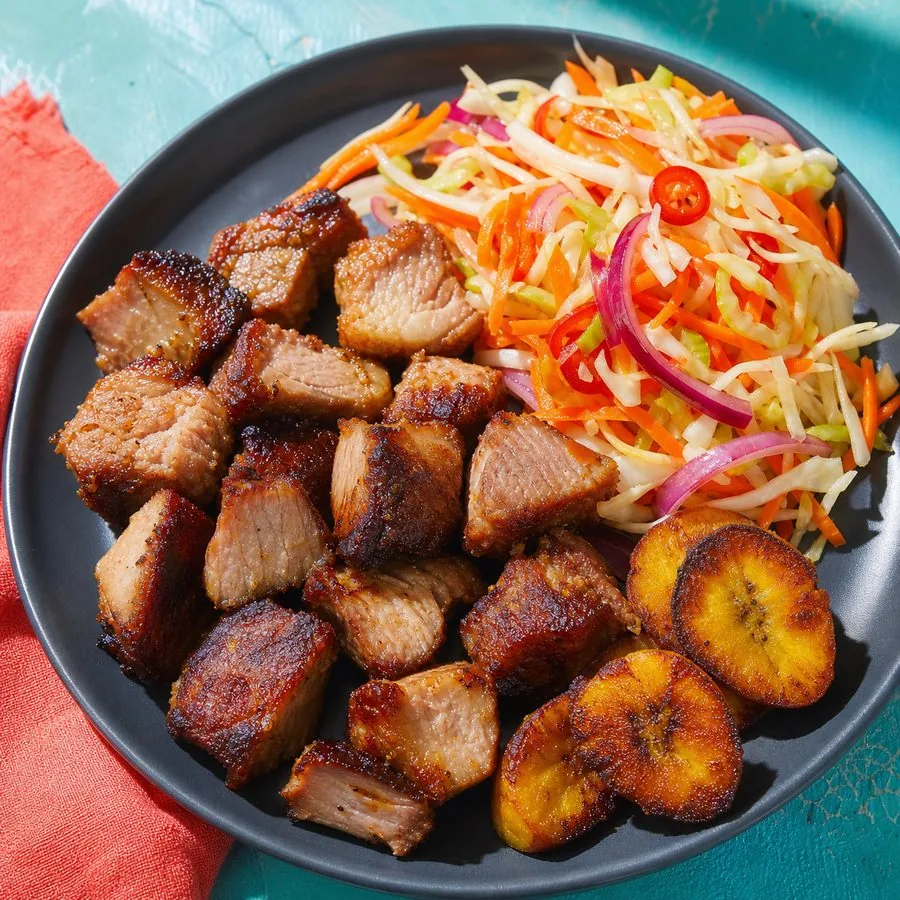
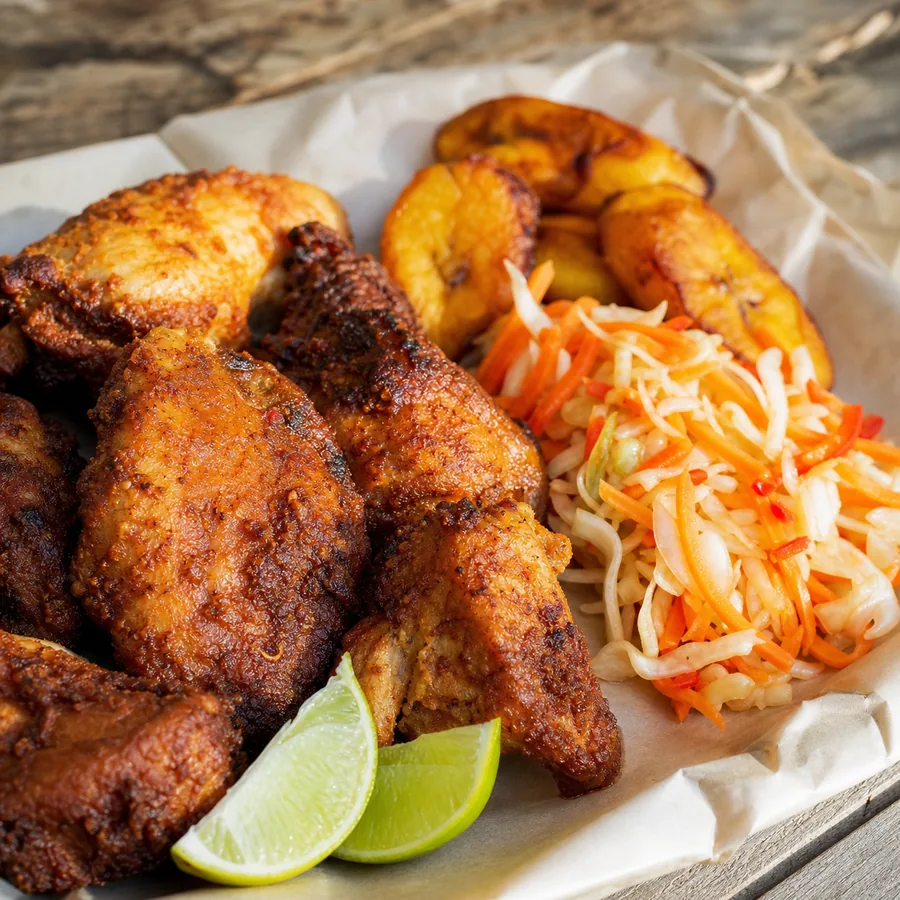
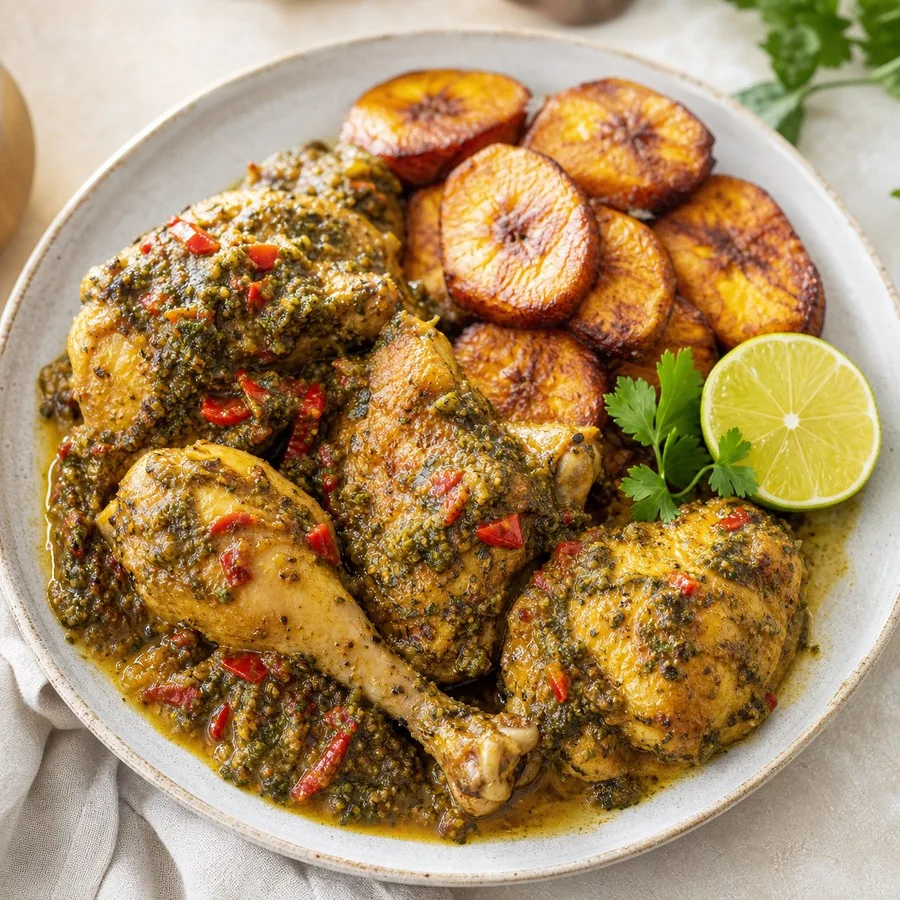
Haitian Epis Chicken with Plantains
Chicken marinated in green epis seasoning, browned, and braised with tomato, served with fried plantain.
- 45 min
- Serves 4
- Chicken
Ingredients
- 1 1/4 lb boneless chicken thighs
- 2 ripe plantains, sliced
- 1 cup mixed parsley, cilantro, and scallion
- 6 garlic cloves
- 1 green bell pepper, half chopped for epis and half sliced
- 4 tbsp neutral oil, divided
- 1 large onion, half for epis and half sliced
- 3 tbsp lime juice, plus 1 lime cut into wedges
- 1 tsp dried thyme
- 3 ripe tomatoes, diced, plus 1 tbsp tomato paste
- 1 cup chicken broth
- Salt and black pepper
Steps
- Make the epis: blend the herbs, garlic, the chopped half of the pepper and onion, the lime juice, thyme, 1 tablespoon of the oil, and 1 teaspoon salt into a coarse green paste.
- Rub two-thirds of the epis into the chicken and marinate for at least 30 minutes, or overnight in the refrigerator. Keep the rest for the sauce.
- Scrape the marinade off the chicken and pat the pieces dry. Wet, herb-coated chicken will steam and the herbs will scorch instead of browning.
- Heat 1 tablespoon of the oil in a heavy pot over medium-high heat and brown the chicken for 5 minutes per side, then lift it out.
- Add the sliced onion and pepper and cook for 6 minutes, then the tomato paste for 2 minutes and the tomatoes for 6 minutes, until collapsed.
- Return the chicken with the reserved epis and the broth, cover, and simmer over low heat for 25 minutes, until it reaches 165F (74C) and the sauce has thickened.
- Meanwhile heat the remaining oil in a skillet and fry the plantain slices for 2 to 3 minutes per side, until deep golden. Drain on a rack and salt.
- Serve the chicken and sauce with the fried plantain and lime wedges.
Allergen note: No common allergens in the listed ingredients; check packaged items.
Use the listed quantities as a guide, adjust seasoning to taste, and cook proteins to a safe internal temperature.