Tonight's dinner
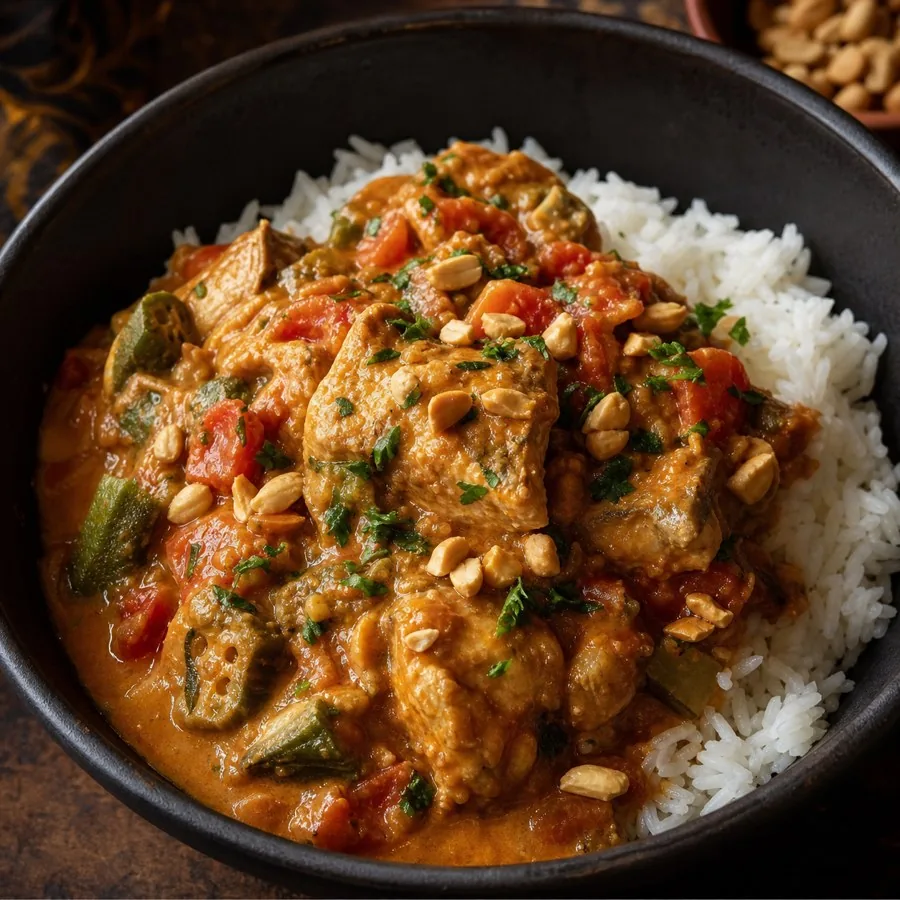
Guinean Peanut Fish Stew
White fish poached in a peanut and tomato sauce, spooned over steamed rice with lime.
- 40 min
- Serves 2
- Fish
Ingredients
- 12 oz white fish fillets, cut into large chunks
- 1/2 cup smooth peanut butter
- 2 tbsp neutral oil
- 1 small onion, finely diced
- 4 garlic cloves, minced
- 1 tbsp freshly grated ginger
- 3 ripe tomatoes, diced, plus 1 tbsp tomato paste
- 1 red chili, minced
- 2 cups fish stock or water
- 1 1/2 cups rice, for serving
- 2 limes, 1 juiced and 1 cut into wedges
- 1 tsp fine salt, plus more to taste
- 2 tbsp chopped cilantro or parsley
Steps
- Rinse the rice and simmer it in 2 1/4 cups salted water, covered, over the lowest heat for 15 minutes, then leave it covered off the heat.
- Pat the fish dry, season it with half the salt and the lime juice, and keep it refrigerated while the sauce cooks.
- Heat the oil in a wide pan over medium heat and cook the onion for 6 minutes until soft, then add the garlic, ginger, and chili for 30 seconds.
- Stir in the tomato paste and cook for 2 minutes until it darkens, then add the diced tomatoes and cook for 8 minutes until they collapse and the oil separates.
- Whisk the peanut butter with 1 cup of the stock in a bowl until smooth and pourable, then stir it into the pan with the rest of the stock.
- Simmer uncovered over low heat for 15 minutes, stirring often, until the sauce is thick, glossy, and the oil begins to rise. Peanut sauces catch and scorch easily, so keep the spoon moving.
- Slide the fish into the sauce in a single layer, cover, and poach gently for 6 to 8 minutes, until the pieces turn opaque, flake at a fork, and reach 145F (63C). Do not stir, or the fish will break up.
- Season with salt and more lime, then serve over the rice with the cilantro and lime wedges.
Allergen note: Contains fish and peanuts.
Use the listed quantities as a guide, adjust seasoning to taste, and cook proteins to a safe internal temperature.