Tonight's dinner
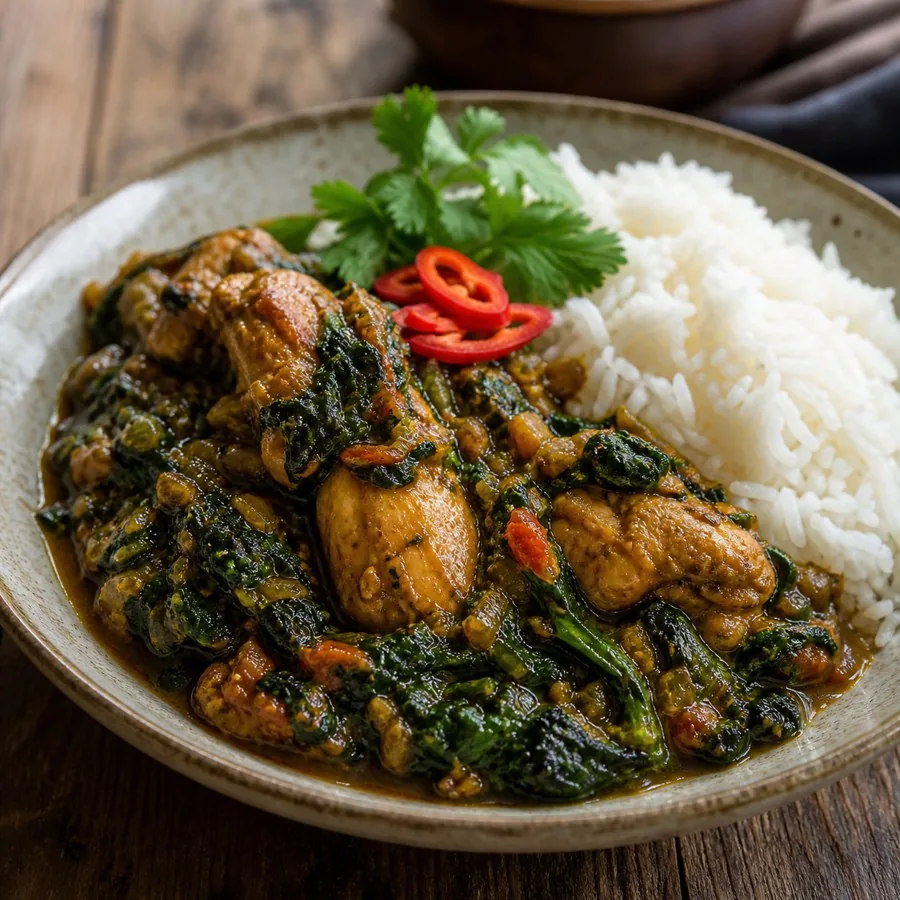
Gabonese Nyembwe Chicken with Spinach
Chicken braised in a rich palm-nut style sauce with spinach, garlic, and chili, spooned over rice.
- 55 min
- Serves 3
- Chicken
Ingredients
- 1 1/4 lb bone-in chicken thighs
- 1 cup palm nut cream or 1/2 cup red palm oil with 1 can coconut milk
- 6 cups chopped spinach
- 2 tbsp neutral oil
- 1 large onion, finely diced
- 5 garlic cloves, minced
- 1 tbsp freshly grated ginger
- 2 ripe tomatoes, diced
- 1 red chili, minced
- 2 cups chicken stock
- 1 1/2 cups rice, for serving
- 1 lemon, cut into wedges
- 1 tsp fine salt, plus more to taste
- 2 tbsp chopped cilantro or parsley
Steps
- Rinse the rice and simmer it in 2 1/4 cups salted water, covered, over the lowest heat for 15 minutes, then leave it covered off the heat.
- Season the chicken with salt and pepper. Heat the oil in a heavy pot over medium-high heat and brown the thighs skin side down for 6 minutes, then 4 minutes on the other side. Lift them out.
- Lower the heat, add the onion, and cook for 8 minutes until soft and golden, scraping up the browned residue, then add the garlic, ginger, and chili for 30 seconds.
- Add the tomatoes and cook for 8 minutes, until they collapse and the oil separates at the edges of the pan.
- Return the chicken with the stock, cover, and simmer over low heat for 25 minutes, until the meat is tender and reaches 165F (74C).
- Stir in the palm nut cream, or the palm oil and coconut milk, and simmer uncovered for 12 to 15 minutes, stirring occasionally, until the sauce thickens and a slick of red oil rises to the surface.
- That rising oil is the sign the nyembwe sauce is ready; before it appears the sauce still tastes raw and thin.
- Fold in the spinach and cook for 3 minutes, just until wilted, then season with salt and lemon and serve over the rice with the cilantro and lemon wedges.
Allergen note: Contains coconut.
Use the listed quantities as a guide, adjust seasoning to taste, and cook proteins to a safe internal temperature.