Tonight's dinner
Finnish Karelian Pie Egg Butter Bowls
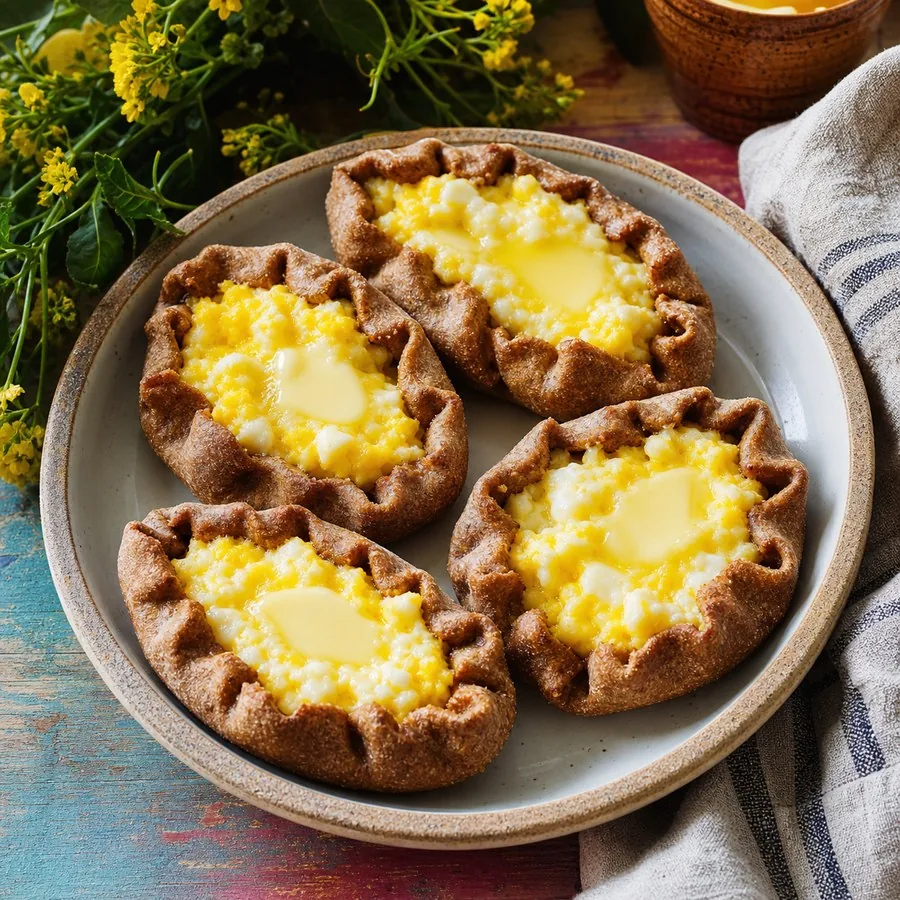
Warm rye Karelian pies over rice, topped with munavoi, the Finnish egg butter of chopped hard-boiled egg mashed into softened butter.
- 35 min
- Serves 2
- Eggs
- Vegetarian
Ingredients
- 4 prepared Karelian rye pies (karjalanpiirakka)
- 3 large eggs
- 3 tbsp unsalted butter, softened
- 1 cup cooked short-grain rice
- 1 tbsp olive oil or unsalted butter
- 2 scallions, finely chopped
- 1 tbsp chopped fresh chives
- 1/2 lemon, cut into wedges
- 1/4 cup fresh herbs, chopped
- Kosher salt and freshly ground black pepper
Steps
- Lower the eggs into a small saucepan of boiling water and cook them for 10 minutes at a steady simmer, then transfer them straight into a bowl of iced water for 5 minutes. The cold shock makes the shells slip off and stops a grey ring forming around the yolks.
- Heat the oven to 350F (175C). Spread the rye pies on a sheet pan and warm them for 8 to 10 minutes, until they are hot through and the rye edges crisp slightly.
- Peel the cooled eggs and chop them finely. Mash them into the softened butter with a fork until the mixture holds together as a coarse, spreadable paste; munavoi should look like chopped egg bound with butter, not a smooth puree.
- Season the egg butter with salt, black pepper, and the chives, then taste it on its own. It needs to be assertively seasoned because it is the only sauce in the bowl.
- Warm the cooked rice with the oil or butter and a pinch of salt in a small pan over low heat, stirring, until it is steaming, then divide it between two shallow bowls.
- Set two hot pies on each bowl of rice and spoon the egg butter generously over them while they are still hot, so it softens and just begins to melt into the rye filling.
- Finish with the scallions and fresh herbs and serve with lemon wedges.
Allergen note: Contains wheat, rye, dairy, and egg.
Use the listed quantities as a guide, adjust seasoning to taste, and cook proteins to a safe internal temperature.