Tonight's dinner
Cape Verdean Cachupa Quick Skillet
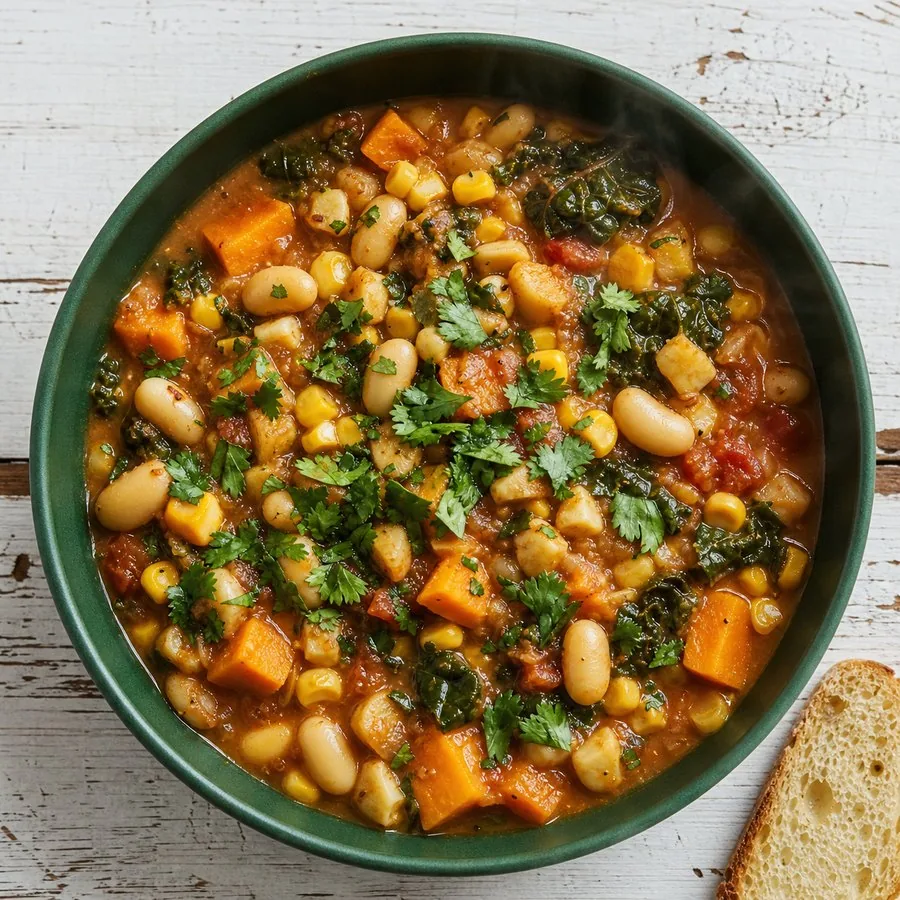
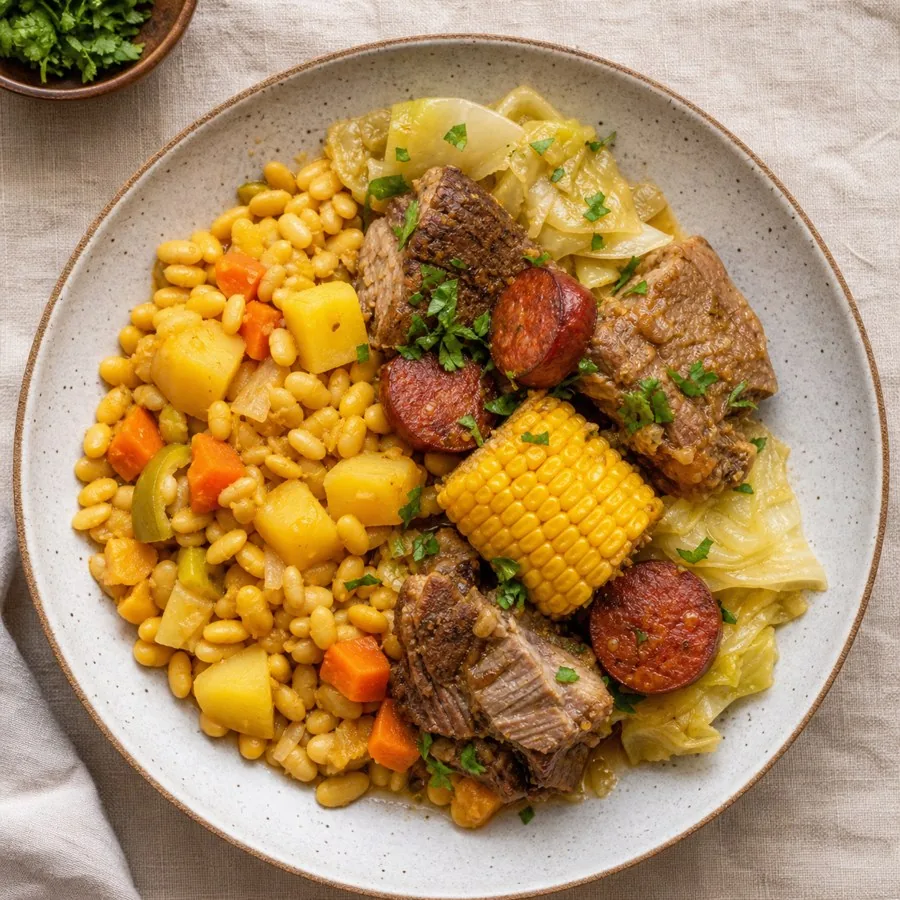
Hominy, beans, and sweet potato simmered with bay and paprika until thick, then crisped in the pan the next-day way.
- 55 min
- Serves 4
- Beans
- Vegan
Ingredients
- 1 can hominy or corn, drained
- 1 can white or kidney beans, drained
- 12 oz sweet potato, cut into 1/2-inch cubes
- 3 tbsp olive oil
- 1 small onion, finely diced
- 4 garlic cloves, minced
- 3 ripe tomatoes, diced
- 2 bay leaves
- 1 tsp sweet paprika
- 2 cups vegetable stock
- 4 cups shredded greens or cabbage
- 1 lemon, cut into wedges
- 1 tsp fine salt, plus more to taste
- 2 tbsp chopped cilantro or parsley
Steps
- Heat 2 tablespoons of the oil in a wide heavy pot over medium heat and cook the onion with a pinch of salt for 8 minutes, until soft and golden.
- Add the garlic and bay leaves for 30 seconds, then take the pot off the heat and stir in the paprika for 20 seconds so it toasts without scorching.
- Return to the heat, add the tomatoes, and cook for 8 minutes until they collapse and the oil separates at the edges.
- Add the sweet potato, stock, and salt, bring to a simmer, and cook for 12 minutes, until the cubes are almost tender.
- Add the hominy, beans, and greens and simmer for 12 to 15 minutes more, until everything is soft and the liquid has reduced to a thick sauce that just coats the vegetables.
- Crush some of the sweet potato and beans against the side of the pot so their starch binds the stew; cachupa should hold together on the spoon, not swim.
- Raise the heat to medium-high, add the remaining oil, and press the mixture flat against the base of the pot. Leave it undisturbed for 5 to 6 minutes to form a browned crust underneath, the way refried cachupa is served.
- Fish out the bay leaves, fold the crust through, season to taste, and serve with the cilantro and lemon wedges.
Use the listed quantities as a guide, adjust seasoning to taste, and cook proteins to a safe internal temperature.