Tonight's dinner
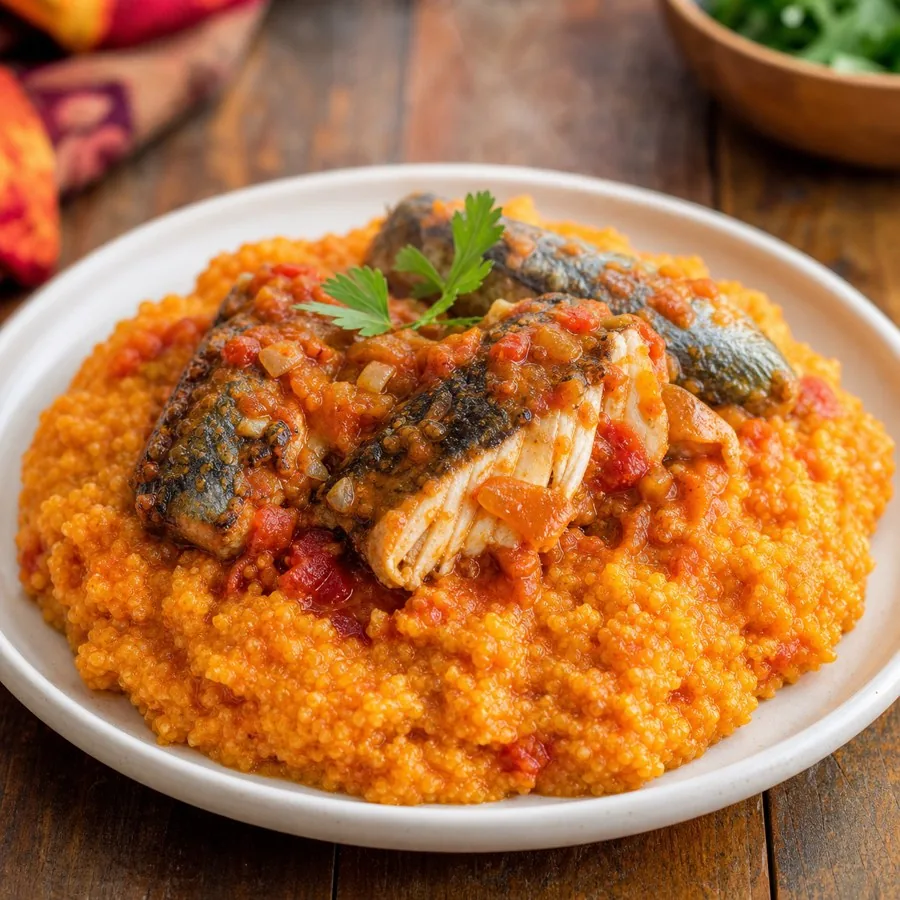
Beninese Amiwo Tomato Cornmeal with Fish
Cornmeal cooked directly in a spiced tomato sauce until dense and red, served with pan-fried fish and slaw.
- 50 min
- Serves 3
- Fish
Ingredients
- 12 oz white fish fillets
- 1 cup fine cornmeal
- 3 ripe tomatoes, chopped, plus 2 tbsp tomato paste
- 2 tbsp neutral oil
- 1 small onion, finely diced
- 3 garlic cloves, minced
- 1 tsp freshly grated ginger
- 1 red chili, minced
- 2 cups chicken or fish stock
- 3 cups shredded cabbage
- 1 lime, cut into wedges
- 1 tsp fine salt, plus more to taste
- 2 tbsp chopped cilantro or parsley
Steps
- Heat 1 tablespoon of the oil in a heavy saucepan over medium heat and cook the onion for 6 minutes until soft, then add the garlic, ginger, and chili for 30 seconds.
- Add the tomato paste and cook for 2 minutes, stirring, until it darkens from bright red to brick, then add the chopped tomatoes and cook for 8 minutes until jammy.
- Pour in the stock and 1 teaspoon salt and bring to a boil.
- Rain the cornmeal into the boiling sauce in a thin, steady stream with one hand while beating hard with a wooden spoon in the other. Tipping it in at once creates lumps you will never break up.
- Cook over low heat for 12 to 15 minutes, beating constantly and scraping the base of the pan, until the amiwo is very stiff and pulls away from the sides in a single mass.
- Keep beating past the point where it looks done. Amiwo should be firm enough to hold a shape when spooned out, not loose like porridge.
- Pat the fish dry, season it with salt, and pan-fry in the remaining oil over medium-high heat for 3 minutes per side, until golden and opaque at 145F (63C).
- Toss the cabbage with lime juice, salt, and the cilantro, then serve the amiwo in mounds with the fish and slaw alongside and lime wedges.
Allergen note: Contains fish.
Use the listed quantities as a guide, adjust seasoning to taste, and cook proteins to a safe internal temperature.