Tonight's dinner
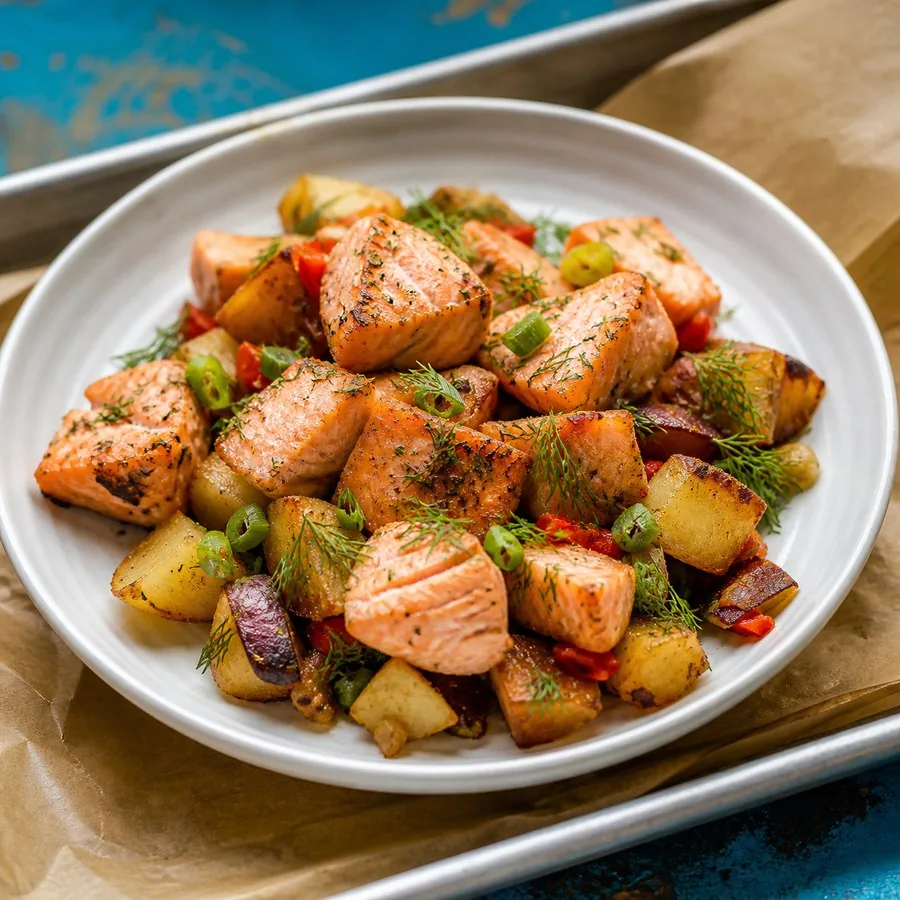
Alaskan Salmon Potato Hash with Dill
Crisp potato hash with flaked salmon and dill, built in one skillet with a fried egg on top.
- 30 min
- Serves 2
- Fish
Ingredients
- 10 oz salmon fillet, skin removed
- 1 lb waxy potatoes, cut into 1/2-inch cubes
- 3 tbsp neutral oil or butter, divided
- 1/2 yellow onion, finely diced
- 2 garlic cloves, minced
- 1 small red bell pepper, diced
- 2 large eggs
- 3 tbsp chopped fresh dill
- 1 lemon, half juiced and half cut into wedges
- 2 tbsp chopped fresh herbs
- Salt and black pepper
Steps
- Put the cubed potatoes in a saucepan, cover with cold salted water, and bring to a boil. Simmer for 6 minutes, until the edges are just yielding but the centres still firm.
- Drain them thoroughly and leave them in the colander for 5 minutes to steam dry. This parboil-and-dry step is the only reliable way to get a hash that is crisp outside and fluffy inside.
- Season the salmon with salt and pepper. Heat 1 tablespoon of the oil in a wide skillet over medium-high heat and cook the fillet for 3 minutes per side, until just opaque at 145F (63C). Lift it out and flake it into large pieces.
- Add the remaining oil to the pan, raise the heat, and add the potatoes in a single layer. Leave them completely undisturbed for 5 minutes so a crust forms.
- Turn them and cook for 8 to 10 minutes more, turning every few minutes, until golden on most sides. Add the onion and bell pepper for the last 5 minutes and the garlic for the last 30 seconds.
- Fold the flaked salmon and the dill through gently, keeping the pieces intact rather than breaking them into shreds, and season with salt, pepper, and the lemon juice.
- Fry the eggs in a separate pan over medium heat until the whites are set and the yolks still runny, about 3 minutes.
- Divide the hash between two plates, top each with a fried egg, and serve with the fresh herbs and lemon wedges.
Allergen note: Contains dairy, egg and fish.
Use the listed quantities as a guide, adjust seasoning to taste, and cook proteins to a safe internal temperature.