Tonight's dinner
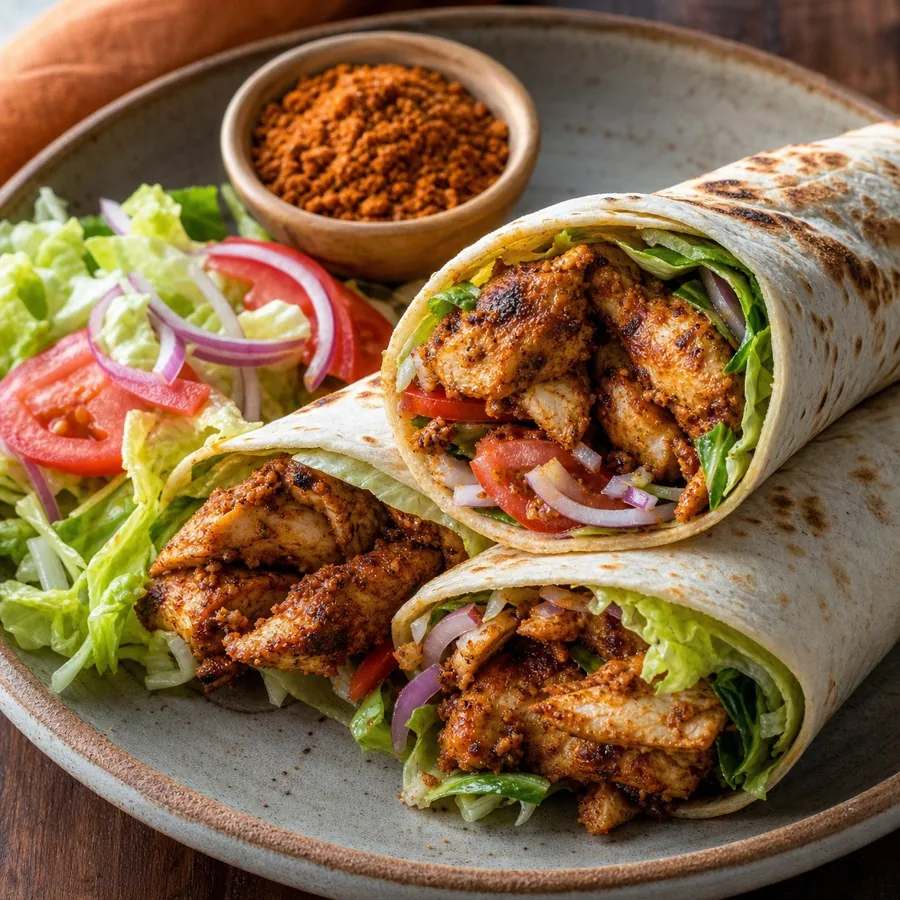
Nigerian Suya Chicken Wraps
Chicken coated in a peanut and cayenne suya rub, seared hard, and wrapped with raw onion and tomato.
- 30 min
- Serves 2
- Chicken
Ingredients
- 1 lb chicken breast or thigh, cut into thin strips
- 1/3 cup roasted peanuts, ground to a powder
- 1 tbsp sweet paprika
- 1 to 2 tsp cayenne pepper
- 1 tsp ground ginger
- 1/2 tsp garlic powder
- 3 tbsp neutral oil, divided
- 1 large onion, half sliced raw and half diced
- 3 garlic cloves, minced
- 2 ripe tomatoes, diced
- 4 flatbreads or wraps
- 2 lemons, 1 juiced and 1 cut into wedges
- 1 tsp fine salt, plus more to taste
- 2 tbsp chopped cilantro or parsley
Steps
- Grind the roasted peanuts to a fine powder in a spice grinder, then tip them onto paper towels and press to blot the oil. Oily peanut powder clumps instead of coating.
- Mix the peanut powder with the paprika, cayenne, ground ginger, garlic powder, and 1 teaspoon salt to make the suya spice.
- Toss the chicken strips with 1 tablespoon of the oil, the fresh garlic, and two-thirds of the suya spice until evenly coated, and leave for 15 minutes.
- Heat the remaining oil in a heavy skillet or grill pan over high heat until it is almost smoking.
- Lay half the chicken in a single layer and leave it undisturbed for 2 to 3 minutes, until deeply browned, then turn and cook 2 minutes more, until it reaches 165F (74C). Cook the rest in a second batch.
- Cook in batches rather than crowding the pan; crowded chicken releases water and steams grey instead of charring.
- Toss the hot chicken with the remaining suya spice off the heat, so the last of it clings without burning in the pan.
- Warm the flatbreads, fill them with the chicken, raw sliced onion, tomato, and cilantro, squeeze lemon over, roll tightly, and serve with lemon wedges.
Allergen note: Contains peanuts and gluten.
Use the listed quantities as a guide, adjust seasoning to taste, and cook proteins to a safe internal temperature.