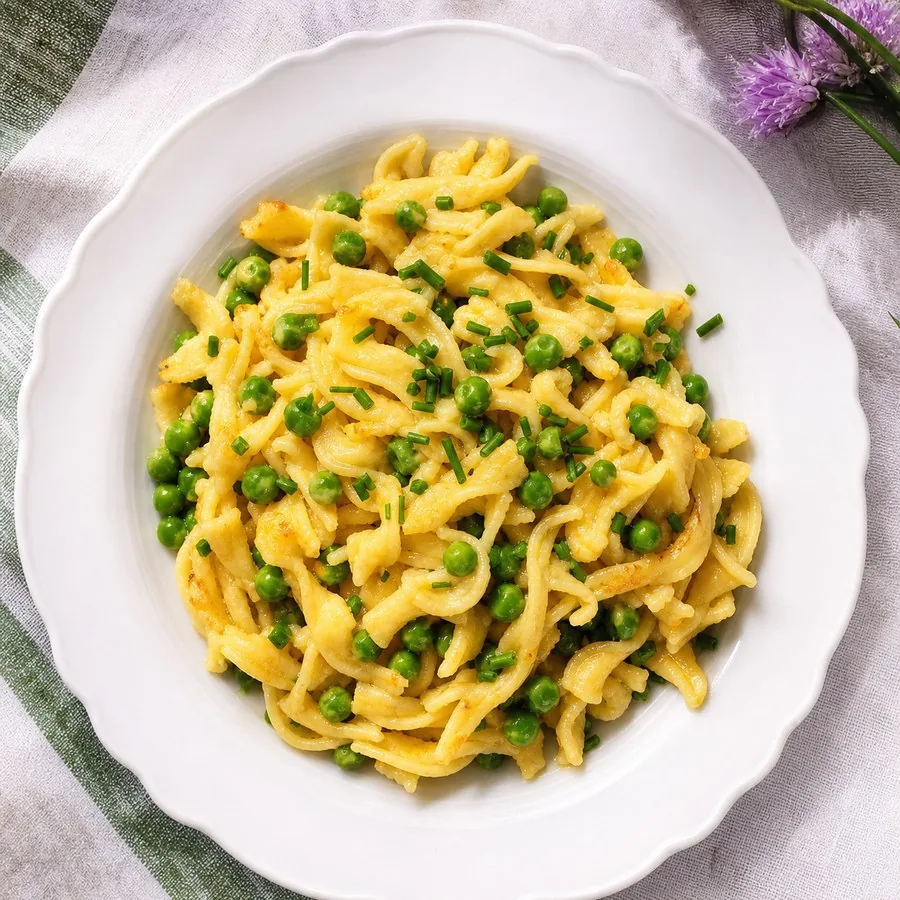
Tonight's dinner
Kuwaiti Balaleet Saffron Noodles with Eggs
Kuwaiti Balaleet Saffron Noodles with Eggs is a practical 30-minute dinner for 2, layering 6 oz vermicelli noodles with 3 large eggs and bright ground cardamom.
- 30 min
- Serves 2
- Eggs
- Vegetarian

Ingredients
- 6 oz vermicelli noodles
- 3 large eggs
- 1/2 cup raisins
- 2 tbsp unsalted butter
- 3 tbsp sugar
- 1 pinch saffron threads
- 1/2 tsp ground cardamom
- 1/4 tsp ground cinnamon
- 1 tsp rose water, optional
- 1/4 cup chopped pistachios
- 1/4 tsp fine salt
Steps
- Crumble the saffron into 3 tablespoons of warm water and leave it to steep for 10 minutes, until the water is deep orange. Dry saffron scattered into the pan gives colour in specks rather than throughout.
- Break the vermicelli into 2-inch lengths. Melt half the butter in a wide skillet over medium heat and toast the noodles, stirring constantly, for 3 to 4 minutes until they turn an even golden brown.
- Watch them closely at this stage; thin vermicelli goes from golden to burnt in under a minute.
- Pour in 1 1/2 cups water, the saffron water, the sugar, cardamom, cinnamon, raisins, and salt. Bring to a boil, then reduce to low, cover, and cook for 6 to 8 minutes until the noodles are tender and the liquid has been absorbed.
- Uncover, stir in the rose water if using, and leave the pan on the lowest heat for 2 minutes so any remaining moisture steams off and the noodles stay separate.
- Beat the eggs with a pinch of salt. Melt the remaining butter in a nonstick skillet over medium-low heat and pour in the eggs.
- Cook the omelette flat and slowly for 3 to 4 minutes without stirring, until just set on top with no browning; balaleet is topped with a pale, tender omelette, not a browned one.
- Pile the sweet noodles onto plates, lay the omelette over them, and scatter with the pistachios.
Allergen note: Contains gluten, egg, dairy, and tree nuts.
Use the listed quantities as a guide, adjust seasoning to taste, and cook proteins to a safe internal temperature.