Tonight's dinner
Ecuadorian Llapingachos with Peanut Sauce
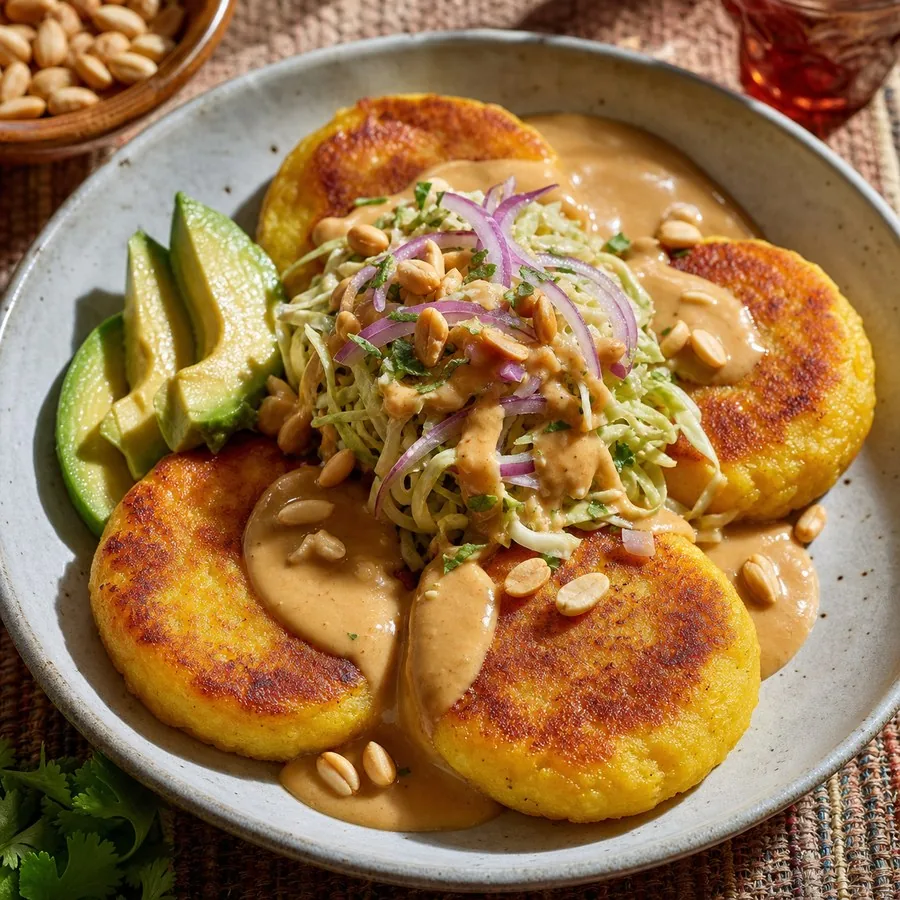
Cheese-stuffed potato cakes griddled until crisp, served with a peanut sauce and avocado.
- 45 min
- Serves 4
- Vegetables
- Vegetarian
Ingredients
- 2 lb starchy potatoes, peeled and cubed
- 6 oz cheese, grated
- 1/2 cup smooth peanut butter
- 4 tbsp neutral oil, divided
- 1 large onion, finely diced
- 3 garlic cloves, minced
- 1 tsp ground achiote or paprika
- 1 cup milk
- 1 avocado, sliced
- 2 ripe tomatoes, diced
- 1 lime, cut into wedges
- 2 tbsp chopped fresh herbs
- Salt and black pepper
Steps
- Boil the potatoes in salted water for 18 to 20 minutes, until completely tender, then drain and let them steam-dry in the colander for 5 minutes.
- Mash them while hot, without any liquid at all. Adding milk or butter makes a mash too loose to shape, and llapingachos need a stiff dough.
- Heat 1 tablespoon of the oil in a small pan and cook half the onion for 5 minutes, then add the garlic and achiote for 30 seconds. Work this into the mash with 1 teaspoon salt.
- Let the mash cool completely, then divide it into eight. Flatten each portion in your palm, put a spoonful of cheese in the middle, and close the potato around it, patting into a smooth disc about 3/4 inch thick.
- Chill the cakes for 20 minutes. Cold cakes hold together on the griddle; warm ones split and leak cheese.
- For the sauce, cook the remaining onion in 1 tablespoon of the oil for 5 minutes, then whisk in the peanut butter and the milk a little at a time until smooth and pourable. Simmer 5 minutes and season.
- Heat the remaining oil on a griddle or heavy skillet over medium heat and cook the cakes for 5 to 6 minutes per side, without moving them, until a deep golden crust forms.
- Serve hot with the peanut sauce, the avocado, the tomatoes, the herbs, and lime wedges.
Allergen note: Contains dairy and peanuts.
Use the listed quantities as a guide, adjust seasoning to taste, and cook proteins to a safe internal temperature.